1. Define the buying brief.
Start with buyer type, destination market, target retail season, preferred shapes, finish direction, quantity range and price position. LCL can be arranged with no minimum quantity per pot; a basic handling fee of USD 350 applies to each LCL shipment while the same basic item prices are maintained. Begin with the assortment and quantities that fit the market.
2. Separate product facts from commercial assumptions.
Confirm material, dimensions, drainage, saucer, finish and acceptable variation before discussing final packing and container quantity. A generic online image cannot confirm the specification of a handmade clay item.
3. Approve a physical sample.
Use the sample to agree form, measurements, clay tone, firing character and moss variation. Record corrections in writing and keep the approved sample as the production reference.
4. Confirm the assortment before logistics calculations.
Mixed colours, finishes, product families and sizes are reviewed against item compatibility and packing before order confirmation. Combination is not assumed in advance; carton dimensions, nesting, protection and container utilisation depend on the approved assortment.
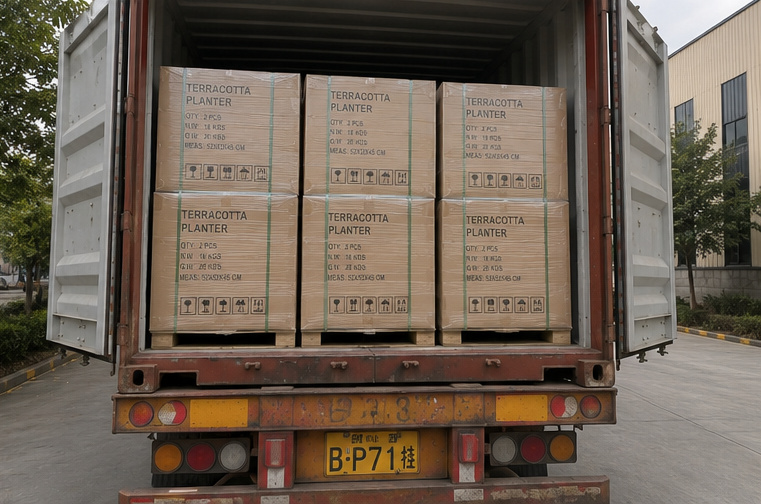
5. Confirm timing and shipment documents.
Normal, moss-finish and custom production typically requires 60–90 days after product details and the order are confirmed. The quotation should identify items, quantities, packing, shipment basis and production timing. Confirm required labels, barcodes, invoices, packing lists and destination-specific compliance before shipment.
Import requirements differ by destination and intended use. Buyers should confirm applicable customs, labelling, product-safety and plant-health requirements with qualified local advisers.