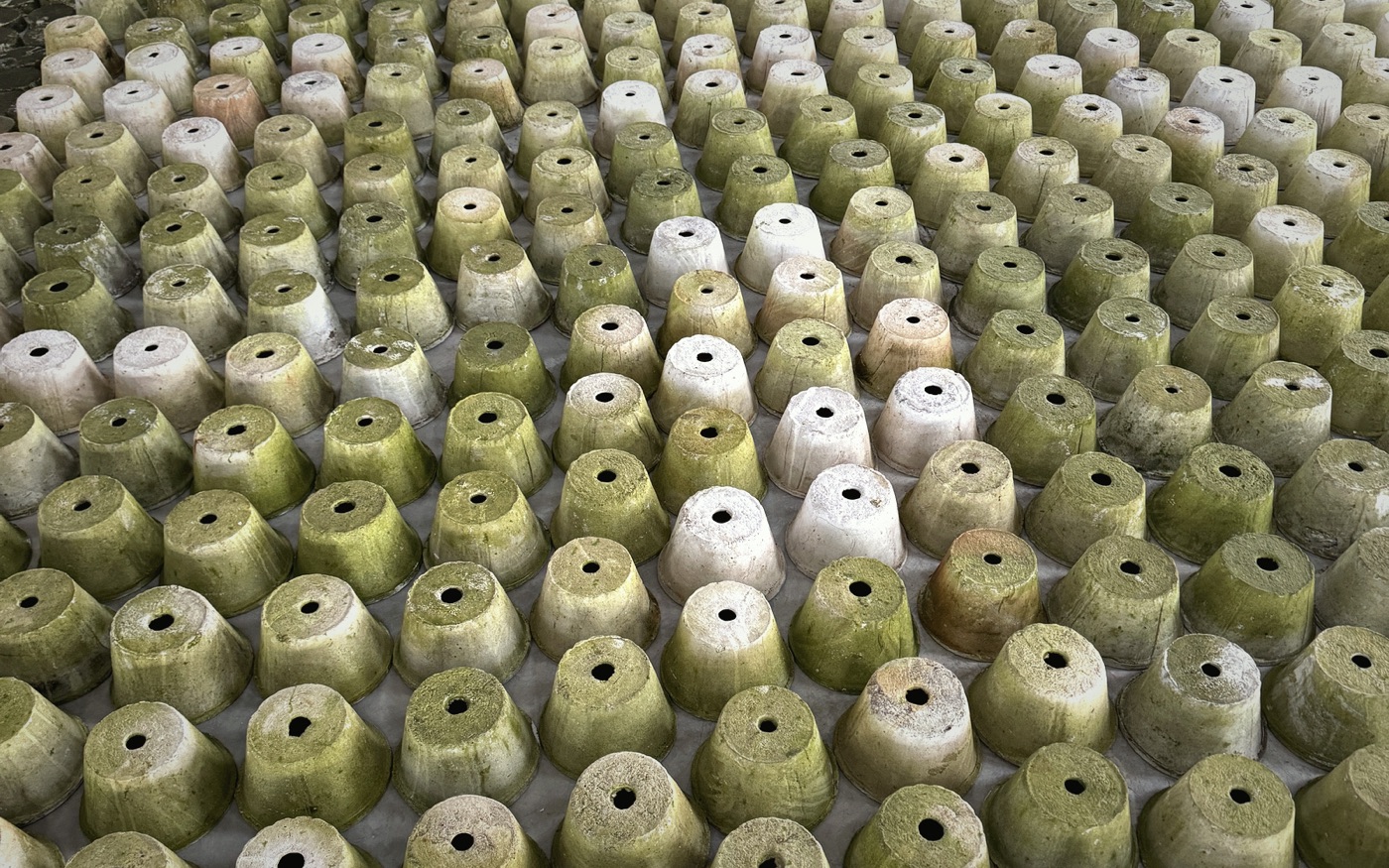
Approve a direction and a range.
A single sample shows the intended character but cannot represent every natural variation in bulk production. Buyers should agree the overall clay direction, moss depth, colour balance and unacceptable extremes.
Review samples in relevant light.
Compare surfaces in daylight and in the intended retail environment. Screen colour and studio lighting can make green, grey and mineral tones appear more uniform than the physical product.
Define what must remain consistent.
Shape, drainage, size tolerance, structural integrity and packing can be controlled differently from organic surface character. Separate functional requirements from aesthetic variation in the approval record.
Communicate variation at retail.
Natural differences are part of the collection story. Product descriptions, sales training and merchandising should help customers understand that no two cultivated surfaces are identical.